Travel Ban Exemption Categories: Integrating Legal Data into Visual Workflows
Navigating international travel restrictions requires more than just legal knowledge; it demands clear communication. For professionals managing global mobility, immigration consulting, or corporate compliance, the ability to translate complex regulatory frameworks into digestible formats is a critical skill. Travel Ban Exemption Categories represent specific legal pathways that allow individuals to bypass general entry prohibitions based on humanitarian, diplomatic, medical, or national interest grounds. While the legal definitions are static, the way this information is presented to stakeholders must be dynamic and accessible.
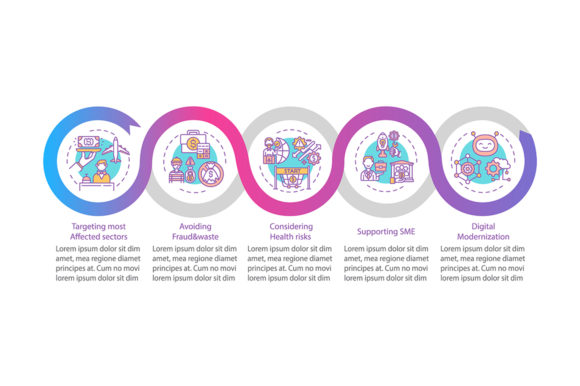
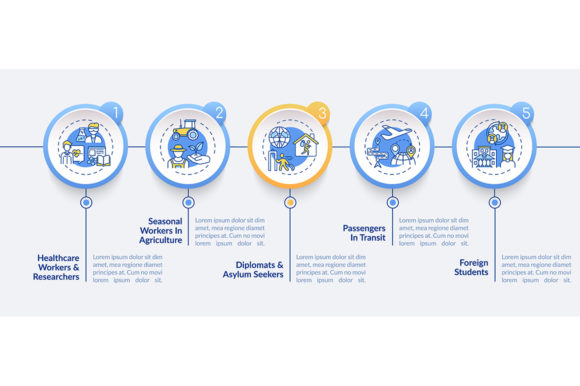
This is where specialized design assets bridge the gap between legal expertise and client understanding. A travel ban exemption categories vector infographic template serves as a functional tool within a broader advisory workflow. Rather than sending dense text documents, professionals can utilize structured visual aids to map out eligibility, document requirements, and approval timelines. This approach not only enhances comprehension but also demonstrates professionalism and organizational competence. By integrating high-quality vector graphics into your practice, you transform abstract legal concepts into actionable roadmaps for clients and internal teams.
The Role of Visual Assets in Compliance Workflows
In the context of immigration and global mobility, clarity reduces anxiety. Clients facing travel bans are often under significant stress, and their ability to process written information may be compromised. Utilizing a traveling presentation design element specifically tailored for exemption categories allows advisors to anchor conversations around concrete visuals. These assets function as cognitive scaffolds, helping non-experts understand where they fit within the regulatory landscape.
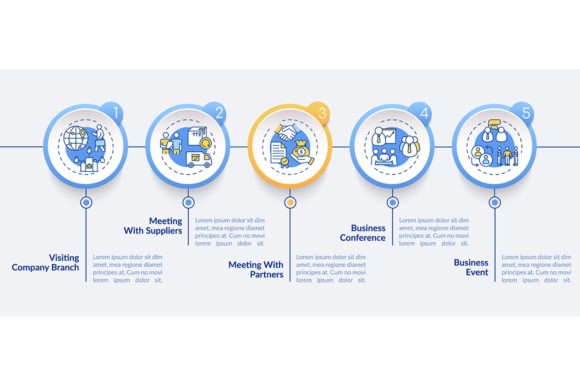
For marketers and educators in the legal space, these templates serve a dual purpose. Internally, they standardize how case officers explain options to applicants, ensuring consistency across the firm. Externally, they provide high-value content for blogs, webinars, and client portals. When you present data visualization with 5 steps regarding the exemption application process, you move beyond theoretical advice to practical guidance. This shift from "what the law says" to "how we navigate the law" is essential for building trust and demonstrating E-E-A-T (Experience, Expertise, Authoritativeness, and Trustworthiness) in digital content.
Structuring Information with Process Timeline Charts
Effective communication of exemption categories relies heavily on sequencing. A process timeline chart is indispensable for illustrating the chronological nature of waiver applications. Unlike generic icons, a dedicated workflow layout with linear icons provides a professional aesthetic that aligns with corporate branding while maintaining visual simplicity. Linear iconography reduces visual noise, allowing the viewer to focus on the progression of steps rather than decorative elements.
When implementing these charts, consider the five critical phases often associated with exemption requests:
- Eligibility Assessment: Identifying which specific exemption category applies to the individual’s circumstances.
- Evidence Compilation: Gathering supporting documentation, affidavits, and expert opinions required for that specific category.
- Petition Filing: The formal submission process, including fee payments and biometric appointments.
- Adjudication Review: The administrative processing period where consular or agency officers evaluate the claim.
- Final Determination: The issuance of the visa or waiver, or the provision of appeal options if denied.
By mapping these stages onto a vector-based timeline, you create a reusable asset that can be customized for different jurisdictions or specific ban types. This modularity is key for freelancers and small business owners who need to produce high-quality deliverables without hiring a graphic designer for every new case.
Technical Integration and Asset Management
The utility of an infographic template depends entirely on its technical flexibility. Professional workflows require files that scale without degradation and integrate seamlessly with various software ecosystems. The inclusion of EPS, JPG, PNG, SVG, and AI formats in a comprehensive ZIP file ensures compatibility across print and digital mediums. Understanding when and how to use each format is part of efficient resource management.
Vector Formats (AI, EPS, SVG): These are your master files. Adobe Illustrator (AI) and Encapsulated PostScript (EPS) files allow for deep editing of nodes, colors, and typography. They are essential for customizing the template to match specific brand guidelines or updating legal text as regulations change. SVG (Scalable Vector Graphics) is the web-standard equivalent, perfect for embedding interactive or responsive graphics directly into HTML content, client portals, or digital reports without pixelation.
Raster Formats (JPG, PNG): These serve as immediate-use assets. High-resolution JPGs are suitable for printed handouts or presentation slides where file size is less of a concern. PNGs with transparent backgrounds are vital for overlaying workflow diagrams onto existing documents, website headers, or video content. Having pre-rendered versions saves time when quick turnaround is needed and full customization is unnecessary.
Optimizing Presentation Design Elements for Clarity
Acquiring the template is only the first step; effective implementation requires thoughtful adaptation. When customizing traveling presentation design elements, prioritize information hierarchy over decoration. Legal audiences value precision. Ensure that font choices remain legible at smaller sizes, especially when the infographic is viewed on mobile devices or printed as part of a larger dossier.
Color coding is another powerful organizational tool within these templates. Assign distinct colors to different exemption categories—for example, blue for medical waivers, green for humanitarian parole, and gray for administrative processing. This creates a visual language that clients can learn quickly, making subsequent communications more efficient. Consistency in color usage across all materials reinforces brand identity and aids in information retention.
Practical Application Across Professional Roles
Different professionals leverage these assets in unique ways depending on their specific objectives and audience needs. Recognizing these use cases helps maximize the return on investment for design resources.
Immigration Attorneys and Paralegals: Use the workflow layout during initial consultations to manage client expectations. Showing a visual timeline prevents misunderstandings about processing times and clarifies the client's responsibilities at each stage. It transforms the consultation from a passive lecture into an interactive planning session.
Corporate HR and Global Mobility Managers: Integrate exemption category infographics into internal relocation policies and employee handbooks. Visual guides reduce repetitive questions to HR departments and empower employees to self-assess their eligibility before initiating formal requests. This streamlines internal triage and improves overall departmental efficiency.
Content Creators and Legal Bloggers: Enhance SEO performance and user engagement by replacing stock photos with informative data visualization. Search engines increasingly favor content that provides direct answers and structured data. An annotated infographic keeps users on the page longer and signals topical authority. When writing about complex topics like travel bans, the image itself becomes a linkable asset that attracts backlinks from other industry sites.
Educators and Trainers: Incorporate these templates into curriculum materials for paralegal studies or international relations courses. Students benefit from seeing how theoretical legal categories translate into practical administrative workflows. The linear icon style is particularly effective for educational slides, as it avoids distracting details and focuses attention on process logic.
Maintaining Accuracy and Quality Control
While design templates facilitate communication, they do not replace legal verification. Regulations regarding travel ban exemptions evolve frequently. A critical aspect of using these assets is establishing a review protocol. Before publishing or distributing any customized infographic, cross-reference the listed categories and steps against current government guidance. Outdated visuals can cause significant harm and liability.
Create a version control system for your design assets. When regulations change, update the master AI/EPS file and re-export all derivative formats. Archive older versions to prevent accidental use. For teams, maintain a shared library with clear naming conventions indicating the last update date. This organizational discipline ensures that every stakeholder, from senior partners to freelance writers, accesses only current, accurate information.
Enhancing User Experience Through Strategic Visualization
Ultimately, the goal of using a travel ban exemption categories vector infographic template is to improve outcomes through better understanding. Whether facilitating a successful visa application, educating a student body, or attracting qualified leads through content marketing, the medium shapes the message. Professionals who invest in high-quality, editable visual assets position themselves as modern, client-centric practitioners.
The integration of these tools should feel natural, not forced. Start by identifying friction points in your current communication workflow. Where do clients consistently express confusion? Which explanations take up disproportionate amounts of time? Target those areas first with visual solutions. Over time, build a library of customized process charts and timelines that reflect your specific expertise and methodology.
By treating design elements as integral components of professional service delivery rather than mere decoration, you elevate the quality of your work. The combination of accurate legal knowledge and sophisticated data visualization creates a compelling value proposition. In a field defined by complexity and uncertainty, providing clear, structured, and visually coherent guidance is a definitive competitive advantage. The availability of multi-format ZIP packages makes this level of polish accessible to solo practitioners and large firms alike, democratizing access to professional-grade communication tools.