Staff Development Vector Infographic Design Guide
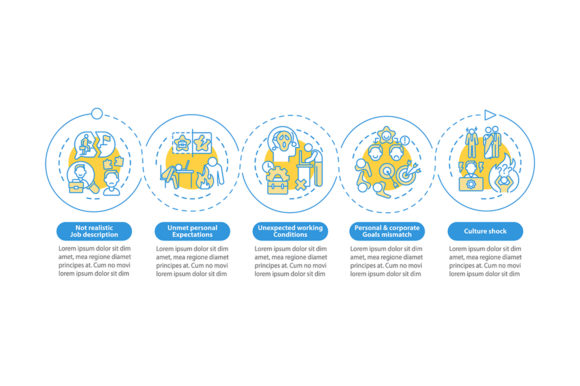
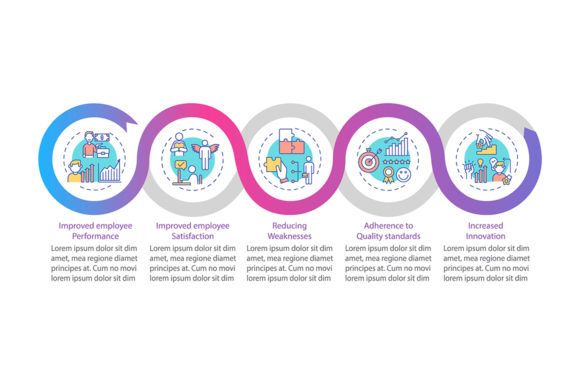
Visualizing human resource strategies requires more than just bullet points on a slide. A Staff Development Vector Infographic serves as a strategic communication tool that transforms complex training methodologies into clear, actionable visual narratives. Whether you are outlining a five-step onboarding process or presenting annual quality standards, the right template bridges the gap between raw data and employee understanding. These design assets are not merely decorative; they function as cognitive aids that help diverse teams grasp performance metrics and workflow expectations quickly.
The value of these templates extends far beyond aesthetic appeal. For different professionals, the utility shifts based on immediate needs and long-term goals. An HR director might prioritize data accuracy and corporate branding consistency, while a freelance designer may focus on file compatibility and editing speed. Understanding these distinct perspectives helps clarify why high-quality vector assets remain essential in modern business communication.
Diverse Applications Across Professional Roles
The way stakeholders interact with staff development visuals depends heavily on their daily responsibilities. Recognizing these differences ensures that the chosen template actually solves specific problems rather than adding unnecessary complexity to a project.
Human Resources and Corporate Trainers
For HR professionals and L&D specialists, clarity is paramount. When presenting performance reviews or new compliance protocols, ambiguity leads to confusion. These users rely on the process timeline chart features to map out career progression paths or training milestones. The priority here is reliability and professional tone. They need layouts that convey authority and structure without looking overly playful. A linear icon workflow allows them to break down dense policy documents into digestible segments during orientation sessions, ensuring new hires retain critical information about quality standards.
Educators and Academic Administrators
In educational settings, staff development often focuses on pedagogy, certification, or administrative efficiency. Educators evaluate these infographics based on learning value and adaptability. Unlike corporate environments where speed is often the primary driver, academic users may spend more time customizing the data visualization with 5 steps to reflect semester-based evaluations or tenure tracks. They require templates that are inclusive and accessible, avoiding jargon-heavy designs in favor of clear, universal symbols that resonate with faculty members from various disciplines.
Freelancers and Creative Agencies
Creative professionals approach these assets through the lens of flexibility and technical specifications. When a client requests a presentation on workforce optimization, the freelancer needs a foundation that saves hours of drafting time. Their evaluation criteria center on the ZIP file contents. Access to EPS, SVG, JPG, and PNG formats means they can deliver print-ready brochures and web-optimized social media graphics from a single source. For this group, the commercial value lies in how easily the vector nodes can be manipulated to match unique brand guidelines without breaking the layout's integrity.
Small Business Owners and Entrepreneurs
Solopreneurs and small team leaders often lack dedicated design departments. For them, a Staff Development Vector Infographic template represents cost-efficiency and speed. They are less concerned with intricate customization and more focused on immediate usability. A pre-designed workflow layout with linear icons allows them to communicate expectations to contractors or part-time staff professionally. Their priority is finding a balance between quality and ease of use, ensuring they can update text and colors in minutes before a team meeting.
Evaluating Technical Quality and Usability
Selecting the right asset involves looking past the thumbnail preview. Practical evaluation requires understanding how the file structure supports your specific workflow. Different formats serve different stages of the production cycle, and knowing which to leverage prevents frustration later.
- EPS Files: Essential for professional designers using Adobe Illustrator or CorelDRAW. This format preserves all vector paths, allowing for infinite scaling and deep structural edits. It is the industry standard for maintaining quality standards in large-format printing.
- SVG Format: Increasingly vital for digital-first presentations. Scalable Vector Graphics ensure that your staff development charts look crisp on retina displays, tablets, and projectors alike. This format is lightweight and ideal for embedding directly into web-based training modules.
- PNG and JPG: While not editable vectors, these raster versions provide immediate utility for quick mockups, email newsletters, or internal memos where design software is unavailable. Having high-resolution exports included in the ZIP file reduces turnaround time for non-designers.
Beyond file types, consider the semantic structure of the template itself. A well-designed Staff Development Vector Infographic uses grouped layers and labeled elements. If you cannot easily identify which shape corresponds to "Step 3" of your training process, the template fails the usability test regardless of how attractive it looks. Beginners should specifically look for templates that include documentation or layer organization, as this significantly lowers the learning curve.
Aligning Visuals with Strategic Goals
The effectiveness of any infographic depends on its alignment with the underlying message. Before downloading a template, assess whether its inherent structure matches your data story. Not every staff development initiative fits a linear model, and forcing mismatched content into a rigid framework creates cognitive dissonance for the audience.
If your goal is to demonstrate cyclical growth or continuous improvement loops, a strict process timeline chart might feel too static. In such cases, look for variations within the template pack that offer circular or modular arrangements. Conversely, if you are presenting a sequential onboarding checklist, a vertical or horizontal linear flow provides the necessary directional cues to guide the viewer’s eye logically from start to finish.
Data density also plays a crucial role in selection. Some templates prioritize negative space and minimalism, perfect for high-level executive summaries where the goal is inspiration rather than instruction. Others are packed with chart placeholders and statistical callouts, better suited for quarterly performance reviews where evidence drives decision-making. Matching the visual weight of the template to the informational weight of your content ensures the final output feels balanced and purposeful.
Practical Considerations for Long-Term Value
Investment in design assets should be viewed through a long-term lens. A versatile Staff Development Vector Infographic template becomes a recurring resource rather than a one-time purchase. Professionals who frequently present on talent management benefit from establishing a consistent visual language across multiple presentations. Using the same icon set and color palette builds familiarity, making future updates easier for audiences to process.
Consider the licensing and commercial rights associated with the asset. Freelancers and agencies must verify that the template permits use in client deliverables. Small business owners should check if modifications are allowed for internal versus external communications. Ensuring legal compliance upfront protects your organization and maintains professional integrity.
Ultimately, the best template is one that respects both the creator's time and the audience's attention. It simplifies the complex nature of staff development without trivializing the importance of human capital. By carefully evaluating technical specs, audience needs, and strategic alignment, you can select a visual tool that enhances communication rather than distracting from it. Whether you are a seasoned designer or a first-time presenter, the right vector asset empowers you to tell a compelling story about growth, performance, and organizational excellence.