Rehab Engineering Vector Infographic Design Guide
Visualizing complex medical technology requires a delicate balance between technical accuracy and human empathy. A Rehab Engineering Vector Infographic serves as this critical bridge, translating intricate biomechanical processes into accessible visual narratives. Unlike standard medical illustrations, these templates focus specifically on the intersection of engineering principles and patient rehabilitation. They utilize clean lines, scalable graphics, and structured layouts to explain how sensory implants, prosthetic interfaces, and therapeutic devices function within the human body. For anyone tasked with communicating these sophisticated concepts, having a dedicated vector template transforms an overwhelming amount of data into a clear, compelling story.
Diverse Perspectives on Technical Visualization
The value of a specialized infographic template shifts dramatically depending on who is using it and what they aim to achieve. While the core asset remains the same, the application varies across professions and skill levels. Understanding these distinct priorities helps determine if this specific design resource aligns with your current project needs.
Clinical Educators and Healthcare Trainers
For professionals teaching anatomy or biomedical engineering, clarity is non-negotiable. These educators prioritize accuracy and instructional flow over artistic flair. A rehab engineering template provides a pre-validated structure that ensures anatomical proportions and mechanical linkages are represented correctly. Instead of spending hours drawing a sensory implant from scratch, an educator can focus on annotating the specific neural pathways or feedback loops relevant to their lesson. The linear icon workflow layout allows them to break down surgical procedures or device calibration into digestible steps, reducing cognitive load for students. Here, the template acts as a pedagogical scaffold, ensuring that complex information is transferred effectively without visual ambiguity.
Medical Device Marketers and Entrepreneurs
In the commercial sector, the priority shifts toward persuasion and brand consistency. Entrepreneurs launching new rehabilitative technologies need to explain their product’s mechanism of action to investors, clinicians, and patients simultaneously. Speed and professional polish are paramount. A high-quality vector template offers an immediate foundation that looks authoritative and trustworthy. The included process timeline chart is particularly valuable for demonstrating product development milestones or patient recovery trajectories. For this audience, the ability to customize colors and typography to match corporate branding while maintaining technical integrity is the primary decision factor. They evaluate the template based on its commercial versatility and its ability to shorten the time-to-market for pitch decks and brochures.
Freelance Designers and Content Creators
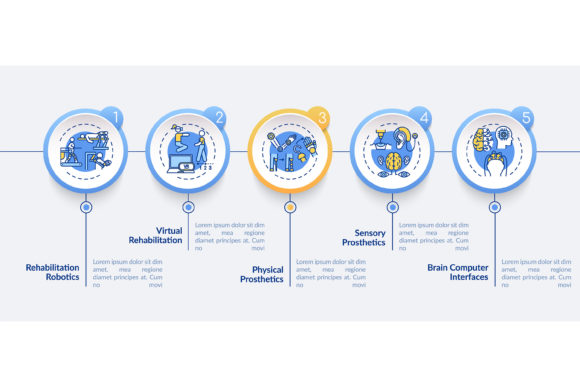
Creative professionals often juggle multiple clients with varying technical literacy. For them, flexibility and file compatibility are the most critical metrics. Access to AI, EPS, SVG, PNG, and JPG formats means they can deliver assets suitable for everything from large-format conference banners to web-optimized blog headers. Experienced designers appreciate templates that use organized layers and smart objects, allowing for rapid iteration without breaking the underlying geometry. Beginners in this space benefit from the embedded design logic; the 5-step data visualization layout teaches best practices for hierarchy and spacing in technical communication. For freelancers, this resource is evaluated not just as a single graphic, but as a reusable system that increases billable efficiency across multiple healthcare projects.
Core Design Elements and Functional Layouts
Effective rehab engineering visuals rely on specific structural components designed to handle dense information. When evaluating a template, look for these functional elements that distinguish professional medical design from generic illustration.
- Physical and Sensory Implant Depictions: High-fidelity vector representations of cochlear implants, retinal prostheses, or spinal cord stimulators. These should be anatomically contextualized rather than floating in isolation, helping viewers understand placement and scale.
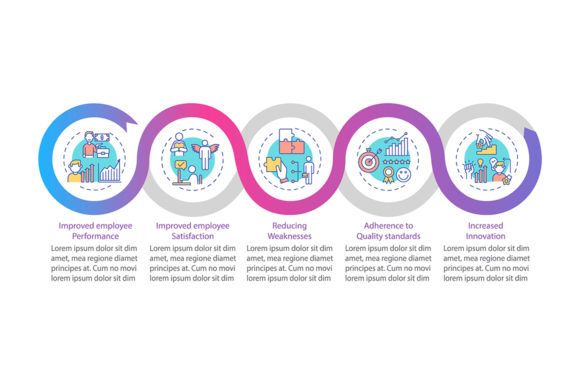
- 5-Step Data Visualization: A modular framework for presenting sequential data. This is essential for explaining signal processing chains (e.g., sound capture → digital conversion → electrode stimulation) or rehabilitation phases. The numbered progression guides the eye logically through complex systems.
- Process Timeline Charts: Horizontal or vertical timelines that map out longitudinal processes. In rehab engineering, this often illustrates the journey from injury assessment to device fitting, adaptation, and long-term maintenance.
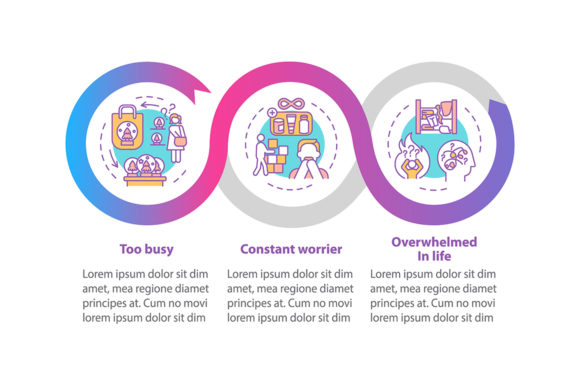
- Linear Icon Workflow: Minimalist line-art icons that represent abstract concepts like "neural feedback," "battery life," or "wireless connectivity." Linear styles reduce visual clutter and maintain a modern, clinical aesthetic appropriate for medical contexts.
Evaluating Format Suitability for Your Workflow
The availability of multiple file types is not merely a convenience feature; it dictates the practical utility of the infographic across different stages of production. Choosing the right format prevents quality loss and workflow bottlenecks.
Scalable Vector Formats (AI, EPS, SVG): These are essential for any editing, resizing, or print production. Adobe Illustrator (AI) files preserve layer structures for deep customization. Encapsulated PostScript (EPS) ensures compatibility with older software and professional printing services. Scalable Vector Graphics (SVG) are crucial for responsive web design, ensuring crisp rendering on retina displays and accessibility compliance through code-level manipulation. If you plan to modify the design or use it across varied media sizes, vector formats are mandatory.
Raster Formats (PNG, JPG): These serve immediate presentation needs. PNG supports transparency, making it ideal for overlaying the infographic onto colored backgrounds in slide decks or documents. JPG offers smaller file sizes for quick sharing via email or social media where perfect scalability is less critical. However, relying solely on raster formats limits future adaptability. Always retain the source vector file even if your current need is only a static image.
Matching Resources to Project Goals
Before integrating a Rehab Engineering Vector Infographic template into your work, assess whether its inherent strengths align with your specific objectives. Not every project requires this level of specialization.
If your goal is patient education, prioritize templates with softer color palettes and simplified iconography. Patients responding to sensory implant therapy may feel overwhelmed by hyper-technical schematics. Look for designs that emphasize outcomes and comfort over engineering specifications. Conversely, if your audience consists of biomedical engineers or surgeons, seek templates that include detailed cross-sections, material callouts, and precise dimensional references. Technical credibility depends on visible detail in these contexts.
Consider also the learning curve versus time investment trade-off. Beginners may find comprehensive AI files intimidating but will benefit immensely from pre-arranged layouts that enforce good design principles. Experienced users might prefer minimal templates that provide base assets without imposing rigid structures, allowing faster customization. Business owners should evaluate licensing terms carefully; ensure the template permits commercial use if the infographic will appear in paid advertising or proprietary training materials.
Ultimately, the right template reduces friction between concept and communication. It should feel like a collaborative tool that understands the unique challenges of rehab engineering visualization. Whether you are explaining the mechanics of a bionic limb to a student or presenting clinical trial data to stakeholders, the best resources make complex information feel intuitive, accurate, and human-centered. By selecting a template that matches your audience’s expectations and your own technical capabilities, you ensure that the focus remains on the transformative impact of rehabilitation technology rather than the struggle to depict it.