Strategic Application of Foreign Language Learning Competencies for Professional Growth
Foreign language learning competencies represent far more than the ability to conjugate verbs or memorize vocabulary lists. For professionals, entrepreneurs, and educators, these competencies function as a strategic framework for cross-cultural communication, market expansion, and cognitive flexibility. When approached intentionally, mastering these skills transforms language acquisition from an academic exercise into a tangible business asset. The modern landscape requires a nuanced understanding of how linguistic proficiency intersects with cultural intelligence, active listening, and digital presentation. Whether you are designing an onboarding process for a global team or positioning yourself as an international consultant, the deliberate application of these competencies dictates your long-term success.
Redefining Competency Beyond Fluency
Many decision-makers mistakenly equate competency with native-level fluency. This is a strategic error that often leads to misallocated resources and unrealistic timelines. True foreign language learning competencies encompass a spectrum of functional abilities tailored to specific professional outcomes. For a marketer entering a new region, competency might mean understanding local idioms and consumer sentiment rather than achieving grammatical perfection. For a software developer working with international teams, it may involve precise technical terminology and the ability to navigate asynchronous communication protocols.
Strategic planning begins with defining what "competent" means for your specific context. This requires auditing your current capabilities against your operational goals. Are you trying to build trust with stakeholders, negotiate contracts, or create localized content? Each objective demands a different configuration of skills. By treating language as a toolset rather than a binary state of knowing or not knowing, you can prioritize learning efforts that yield the highest return on investment. This pragmatic approach prevents burnout and ensures that every hour spent studying directly supports your broader professional mission.
The Critical Role of Active Listening Skills
Among the various pillars of foreign language learning competencies, listening skills are frequently undervalued yet strategically paramount. In high-stakes environments, the ability to comprehend nuance, tone, and unspoken context often matters more than speaking eloquently. Active listening in a second language requires significant cognitive load management and emotional intelligence. It involves decoding meaning from incomplete data, recognizing hesitation, and identifying cultural markers that signal agreement, discomfort, or confusion.
For leaders and negotiators, superior listening skills serve as a risk mitigation strategy. Misunderstandings in cross-border transactions rarely stem from a lack of vocabulary; they usually arise from failing to hear what is being implied. Developing this competency involves practicing with authentic materials—podcasts, meetings, and unscripted conversations—rather than sanitized textbook audio. It also requires creating feedback loops where you verify understanding without disrupting the flow of interaction. When you prioritize listening, you gather higher-quality intelligence, build deeper rapport, and make decisions based on reality rather than assumption.
Cultural Competence as a Business Multiplier
Linguistic accuracy without cultural competence is a liability. You can speak a language perfectly and still offend a potential partner or alienate a customer base because you missed the underlying social code. Cultural competence within foreign language learning competencies refers to the ability to interpret and adapt to different value systems, communication styles, and behavioral norms. This is not merely about etiquette; it is about understanding the "why" behind the "what."
In practical terms, cultural competence influences everything from email structure to product design. A direct communication style valued in one culture may be perceived as aggressive in another. Time orientation, hierarchy, and decision-making processes vary significantly across regions. Integrating cultural analysis into your language learning plan allows you to anticipate friction points. For creators and publishers, this means producing content that resonates emotionally rather than just translating words literally. For operations managers, it means designing workflows that respect local labor norms and expectations. Treating culture as a core competency rather than a soft skill ensures sustainable relationships and reduces costly localization failures.
Visualizing Progress Through Onboarding Vector Templates
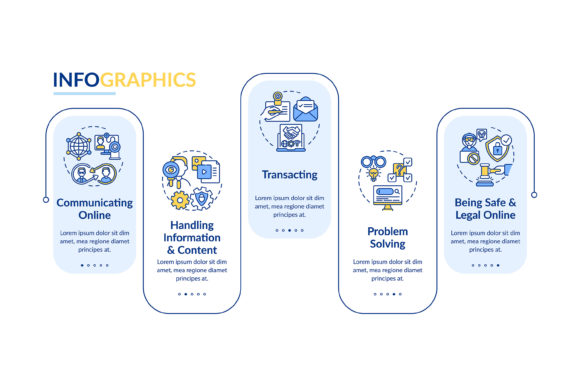
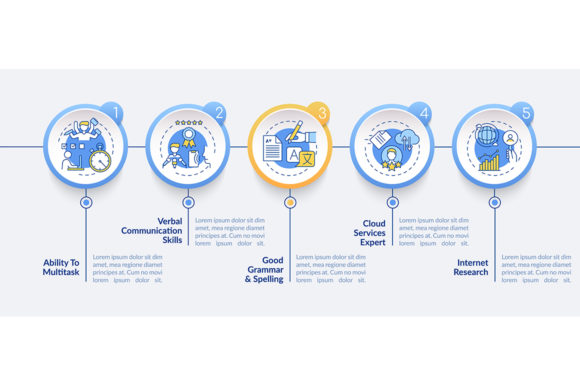
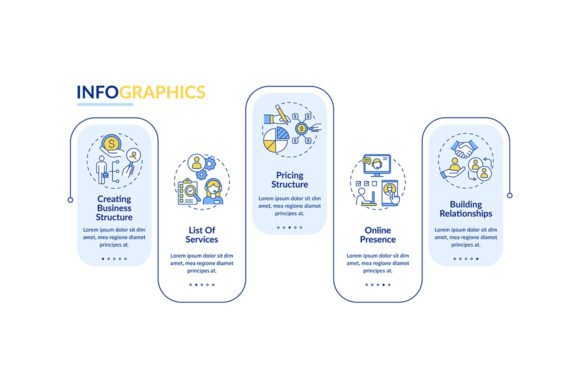
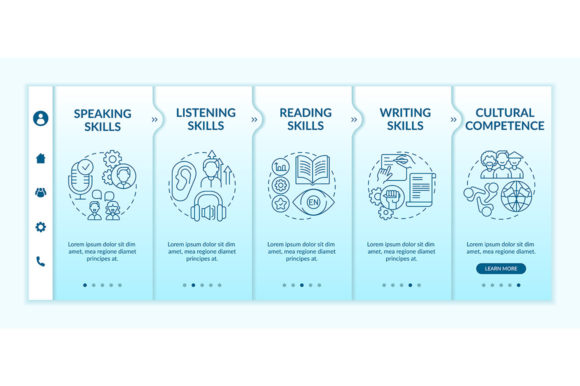
One of the greatest challenges in developing foreign language learning competencies is making abstract progress visible and structured. This is where strategic visualization tools, such as a foreign language learning competencies onboarding vector template, become invaluable assets. These templates are not just decorative; they serve as cognitive scaffolds that map out the journey from novice to competent practitioner. For organizations onboarding international talent or training staff, these visual frameworks standardize expectations and reduce ambiguity.
A well-designed template breaks down complex competencies into manageable milestones. It provides a shared vocabulary for discussing progress and identifies gaps before they become performance issues. When selecting or creating these assets, look for designs that emphasize modularity and clarity over artistic complexity. The goal is to facilitate understanding, not to impress with aesthetics. Using vector-based graphics ensures that your training materials remain crisp and professional across all mediums, from printed handbooks to high-resolution digital displays. This attention to detail signals professionalism and respect for the learner’s journey.
Digital Presentation and Responsive Design
In the digital age, how you present foreign language learning competencies is as important as the content itself. Professionals and educators must ensure their resources are accessible via responsive mobile websites with icons that guide user navigation intuitively. Language learners and global teams are increasingly mobile-first; if your onboarding materials, competency frameworks, or learning modules are not optimized for smaller screens, engagement will suffer regardless of content quality.
Icons play a crucial role in reducing cognitive load for multilingual audiences. Universal visual symbols can bridge gaps where text might fail, providing immediate orientation within a learning platform or document. However, icon selection requires cultural vetting to ensure symbols translate appropriately across your target demographics. Furthermore, webpage walkthrough step screens should be implemented to guide users through complex competency assessments or onboarding processes. These interactive elements transform passive reading into active engagement, reinforcing retention and ensuring users understand how to utilize available resources effectively. Technical accessibility is a component of inclusive competency development.
Leveraging Scalable Assets for Consistent Branding
Maintaining consistency across diverse learning materials and markets requires robust file management. When acquiring or creating visual assets for foreign language learning competencies, ensure you have access to comprehensive source files. A professional ZIP file contains EPS, JPG, PNG, SVG, and AI formats to cover every conceivable use case. SVG and EPS formats are essential for scalable vector graphics that retain quality at any size, making them ideal for responsive web design and large-format printing. AI files allow for deep customization, enabling you to adapt templates to your specific brand colors and organizational structure.
PNG and JPG formats serve immediate needs for presentations, social media, and internal documentation. Having this full suite of formats prevents future bottlenecks where you need to modify a graphic but lack the editable source. From a branding perspective, consistent visual identity reinforces the legitimacy of your competency framework. It demonstrates organizational maturity and helps learners associate specific visual cues with learning milestones. Investing in high-quality, multi-format assets upfront saves time and preserves brand integrity as your programs scale.
Applying RGB Color Concepts in Learning Design
Visual hierarchy significantly impacts how foreign language learning competencies are absorbed. Understanding the RGB color concept is vital for anyone designing digital learning experiences. Colors evoke psychological responses and can be used strategically to categorize information, indicate progress levels, or highlight critical alerts. In a competency framework, distinct color coding can differentiate between skill domains—using blue for listening, green for cultural knowledge, and orange for speaking proficiency, for example.
However, color strategy must account for accessibility and cultural variation. Certain color combinations may be difficult for colorblind users to distinguish, while others may carry unintended connotations in specific cultures. Testing your RGB palettes across devices and with diverse user groups is a necessary step in the design process. Effective use of color enhances usability and makes the learning experience more intuitive. It transforms a dense matrix of skills into a navigable landscape, allowing users to quickly assess their status and identify next steps without excessive reading.
Risks of Unstructured Competency Development
Pursuing foreign language learning competencies without clear goals or context carries significant risks. The most common pitfall is the "perpetual beginner" trap, where individuals accumulate certificates and vocabulary but never achieve functional utility. This occurs when learning is decoupled from real-world application. Another risk is cultural overconfidence, where superficial knowledge leads to stereotyping rather than genuine understanding. In organizational settings, poorly defined competencies can result in biased hiring practices or ineffective training programs that waste budget and morale.
To mitigate these risks, always anchor competency development to measurable outcomes. Establish regular review cycles to validate that skills are transferring to actual performance. Seek external validation through immersion, native-speaker feedback, or practical projects rather than relying solely on standardized tests. Be honest about limitations and transparent about proficiency levels with stakeholders. Intentionality is the antidote to wasted effort. By treating foreign language learning competencies as a strategic discipline rather than a casual hobby, you ensure that your investment yields compounding returns in connection, opportunity, and professional capability.