Media Literacy Features Infographic: A Practical Guide to Visual Communication Assets
In an era where information moves faster than our ability to verify it, the Media Literacy Features Infographic serves as more than just a decorative element for educational content. It is a functional communication tool designed to translate complex cognitive processes into digestible visual narratives. Whether you are an educator building a curriculum, a marketer explaining brand transparency, or a content creator addressing misinformation, this specific type of vector template bridges the gap between abstract concepts and audience understanding. However, possessing the asset is only the first step; understanding how to leverage its design elements effectively determines whether your message clarifies the topic or adds to the visual noise.
Understanding the Anatomy of Media Literacy Templates
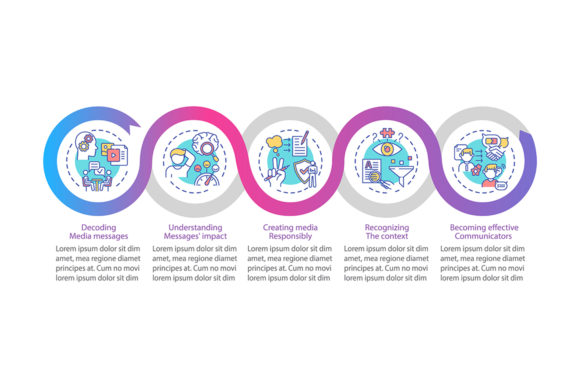
Before downloading or purchasing a Media literacy features vector infographic template, it is vital to understand what distinguishes this category from generic business graphics. These templates are structured around pedagogical frameworks rather than simple data display. They typically include specific modules for decoding messages, analyzing authorship, and evaluating credibility. When you utilize a workflow layout with linear icons, you are not merely arranging shapes; you are guiding the viewer through a critical thinking process.
A common oversight among beginners and even seasoned professionals is treating these infographics as static illustrations rather than dynamic teaching aids. The most effective templates feature a clear process timeline chart that mirrors the actual mental steps of media analysis. If the visual flow contradicts the logical progression of learning, the infographic fails its primary purpose. Always evaluate whether the template’s structure supports the specific media literacy framework you intend to teach, such as the five key questions of media literacy or a specific verification workflow.
Common Pitfalls in Selection and Application
Selecting the right visual asset requires discernment. Many creators make the mistake of prioritizing aesthetic trendiness over instructional clarity. While a neon-colored, 3D-rendered style might look engaging on social media, it often undermines the serious, analytical nature of media literacy education. High-cognitive-load designs can distract learners who are already struggling to grasp nuanced concepts like algorithmic bias or source triangulation.
Another frequent error involves ignoring technical scalability. Users often download low-resolution JPGs for web use without realizing they will eventually need to print high-quality handouts or display the graphic on large screens. This leads to pixelation and a loss of professional credibility. Furthermore, failing to check layer organization in EPS or SVG files can result in hours of frustrating rework. If text is outlined rather than editable, or if icons are flattened into the background, customization becomes nearly impossible. Always verify that the ZIP file contains fully layered vector formats before committing to a template.
The Danger of Generic Data Visualization
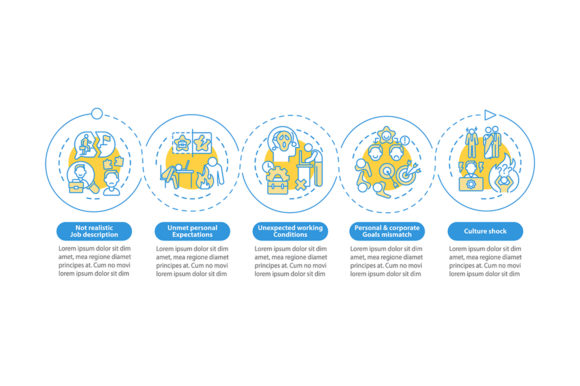
When applying the Data visualization with 5 steps component found in many of these templates, avoid the trap of forcing unrelated content into predefined slots. A five-step model works beautifully for sequential processes like fact-checking, but it may be inappropriate for non-linear concepts like emotional response to media. Forcing a circular concept into a linear timeline creates cognitive dissonance. Instead, adapt the template’s geometry to fit the truth of the content. It is better to hide unused steps or modify the connector lines than to present a misleading process flow just to fill the space.
Optimizing Workflow Layouts for Better Retention
The efficacy of a workflow layout with linear icons depends entirely on semiotic consistency. Icons must be universally recognizable within the context of media studies. Using a generic "gear" icon to represent "critical analysis" is vague and unhelpful. Better choices include magnifying glasses for inspection, scales for balance/bias, or network nodes for connectivity. When customizing your template, audit every icon to ensure it reinforces the accompanying text rather than competing with it.
Consider the reading pattern of your target audience. In Western contexts, left-to-right and top-to-bottom flows are intuitive. However, some templates offer radial or bottom-up designs that may confuse users when applied to foundational media literacy concepts. If you are adapting a template for a global audience or a specific cultural context, test the directional flow with a sample group. Small adjustments to arrow directionality or numbering sequences can significantly improve comprehension rates and reduce the time needed for verbal explanation during presentations.
Technical Considerations for Multi-Format Delivery
Versatility is a key value proposition of professional vector assets. A comprehensive ZIP file containing EPS, JPG, PNG, and SVG formats allows for seamless cross-platform deployment, yet many users underutilize this range. Relying solely on raster formats (JPG/PNG) limits your ability to maintain brand consistency across different media. Vector formats (EPS/SVG) are essential for responsive web design and high-DPI printing.
- SVG: Ideal for web-based interactive content and scalable UI elements. Ensure code is clean and optimized for fast loading.
- EPS: The industry standard for print materials and further editing in Adobe Illustrator. Check compatibility with your software version.
- PNG: Best for presentations and documents requiring transparent backgrounds. Use at 2x resolution for retina displays.
- JPG: Suitable for quick previews or email newsletters where file size is a strict constraint.
Neglecting color profile management is another technical misstep. Templates designed for screen use (RGB) will look muddy and desaturated when printed without conversion to CMYK. Before sending your Media Literacy Features Infographic to a printer, always convert colors and check black text to ensure it is set to 100% K rather than a rich black mix, which can cause registration issues on smaller text sizes typical in detailed infographics.
Evaluating Quality Before Acquisition
Before adding a template to your library, conduct a thorough pre-purchase evaluation. Look beyond the thumbnail preview. Examine the product description for specifics regarding font licensing, as many attractive templates use commercial fonts that require separate purchases. Verify that the "5 steps" or "process timeline" components are constructed using smart objects or easily adjustable paths rather than static images. Read user reviews specifically mentioning editability and customer support responsiveness.
Ask yourself if the template’s tone matches your institutional or personal brand. A playful, cartoon-style media literacy graphic might work for elementary education but could alienate adult learners or corporate stakeholders. Conversely, an overly academic, text-heavy design might overwhelm younger audiences. The best choice balances visual engagement with appropriate gravitas. Remember that the goal is to facilitate understanding, not to showcase design skills. Prioritize templates that demonstrate restraint, clear hierarchy, and ample whitespace for annotation or localization.
Making Informed Design Decisions
Ultimately, successful use of media literacy visuals comes down to intentionality. Avoid the temptation to use every element included in the ZIP file simply because it is available. Curate the features that serve your specific learning objectives. If the template includes ten icons but you only need three to explain a concept clearly, use three. White space is an active design element that aids processing. By approaching these assets with a critical eye—modeling the very media literacy skills you aim to teach—you transform a generic vector template into a powerful, bespoke educational instrument that respects both the subject matter and the audience's intelligence.